
Walk down the cooking oil aisle and you'll see labels like refined, unrefined, cold-pressed, virgin, and extra virgin. Though these terms may sound similar, they can have a significant impact on an oil's flavor, nutritional profile, and cooking performance. In this guide, we'll explain what refined and unrefined oils actually mean, how processing affects smoke point and taste, and how to choose the best oil for frying, baking, sautéing, and dressings.
This post may contain affiliate links. Read my disclosure policy.
Quick Tip: Refined and unrefined oils describe how an oil is processed after extraction. To learn about the extraction process itself, read my Cold-Pressed vs. Expeller-Pressed Oil: What’s the Difference? guide.
Jump to:
Refined vs Unrefined: What's the difference?
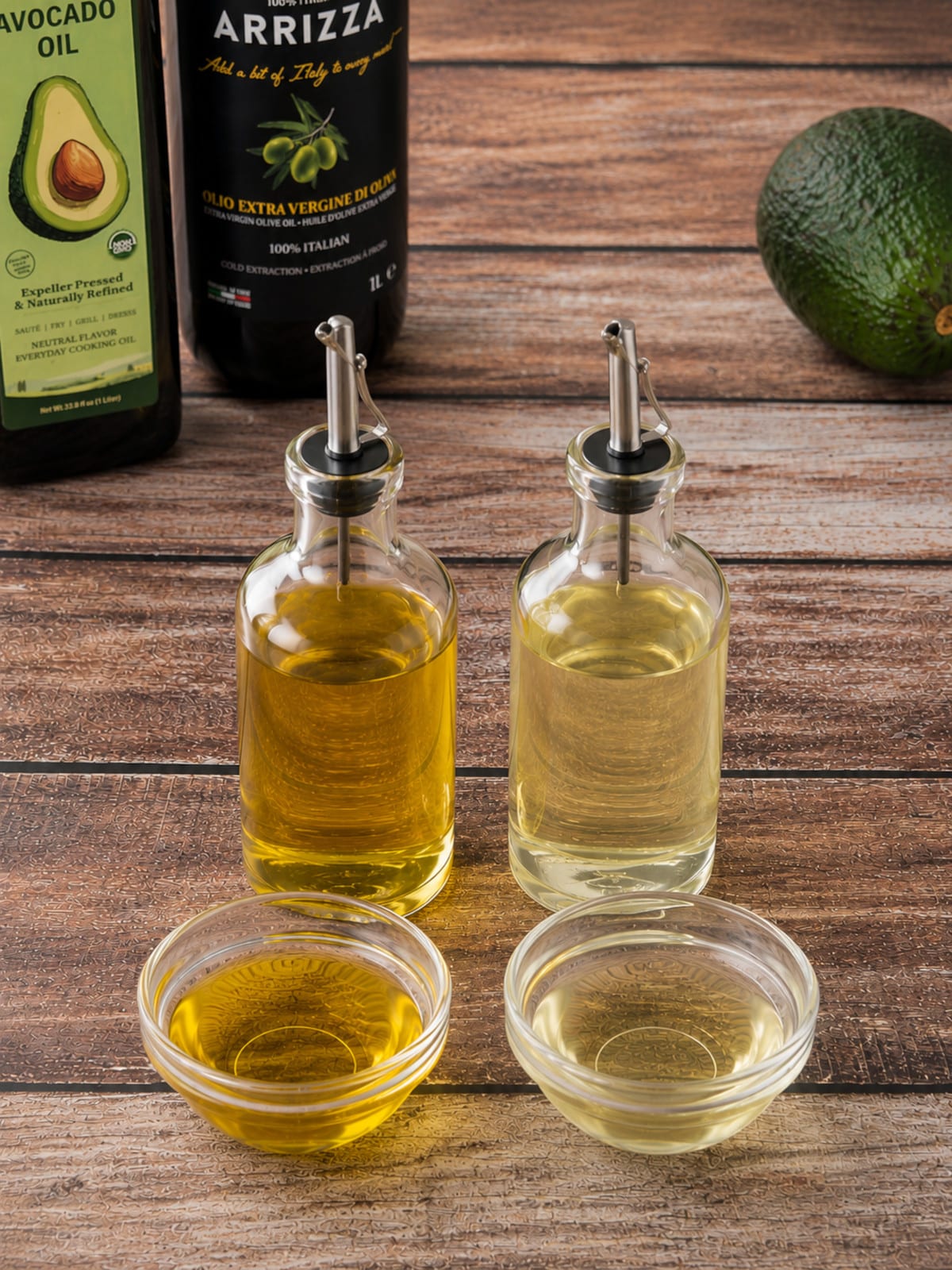
The terms refined and unrefined describe what happens to an oil after it gets extracted from the seed, nut, or fruit.
Unrefined oils go through minimal processing after extraction. Producers filter them lightly to remove large particles, but otherwise leave the oil mainly as-is. This means unrefined oils retain their natural flavor, color, aroma, and nutrients.
Refined oils go through additional processing steps after extraction to remove impurities, neutralise flavor, lighten color, and improve stability. This results in a more neutral oil with a longer shelf life and a higher smoke point. However, some of the oil's natural flavor compounds, antioxidants, and nutrients may be reduced during the refining process.
Refined vs. Unrefined Oils Comparison
| Feature | Refined Oils | Unrefined Oils |
|---|---|---|
| Processing | Undergo additional processing | Minimally processed after extraction |
| Flavor | Mild, neutral flavor | Stronger flavor |
| Aroma | Little to no aroma | Retains natural aroma |
| Color | Usually lighter and more uniform | Often darker and more natural in appearance |
| Smoke Point | Generally higher | Generally lower |
| Shelf Life | Typically longer | Typically shorter |
| Nutrients & Antioxidants | Some beneficial compounds may be reduced during processing | Retains more naturally occurring compounds |
| Best Uses | Frying, sautéing, baking, and high-heat cooking | Salad dressings, dips, finishing oils, and low-to medium-heat cooking |
| Examples | Refined avocado oil, refined coconut oil, canola oil, vegetable oil | Extra virgin olive oil, unrefined coconut oil, toasted sesame oil |
Which type of oil should you use?
Neither refined nor unrefined oils are inherently better. The right choice depends on how you plan to use them.
Choose unrefined oils when flavor is important, such as in salad dressings, dips, marinades, and finishing dishes. Their natural taste and aroma can add depth and character to recipes.
Choose refined oils for high-heat cooking methods like frying, roasting, and sautéing. Their higher smoke points and neutral flavors make them more versatile for everyday cooking.
Many home cooks keep both types on hand: a flavorful unrefined oil, such as extra virgin olive oil, for dressings and finishing, and a refined oil, such as avocado oil, for high-heat cooking.
Avocado oil is actually a great example of how refining can affect an oil's flavor and cooking performance. Though unrefined avocado oil has a richer taste, refined avocado oil has a more neutral flavor and a higher smoke point. Learn more in my post on Why Avocado Oil Is a Kitchen Superstar.
Smoke Point and Why It Actually Matters
One of the biggest differences between refined and unrefined oils is their smoke point. This is the temperature at which an oil begins to smoke and break down.
In general, refined oils have higher smoke points because the refining process removes impurities and compounds that can burn at lower temperatures. This makes refined oils a better choice for high-heat cooking methods such as frying, roasting, and sautéing.
Unrefined oils typically have lower smoke points, but that doesn't mean they can't be used for cooking. Many unrefined oils work well for low-to medium-heat cooking and can add more flavor to finished dishes.
For a deeper look at smoke points, including a comparison chart of common cooking oils, check out our guide on The Importance of Smoke Point in Cooking guide.
Quick Tip: If you're searing, stir-frying, or cooking in a very hot pan, reach for a refined oil with a higher smoke point. Save your extra virgin olive oil for dressings, finishing dishes, and lower-heat cooking where you'll actually notice its flavor.
Frequently Asked Questions
Other did-you-know posts
I’d Love to Hear From You!
Do you keep both refined and unrefined oils in your kitchen, or do you tend to reach for one over the other? Share your go-to oils and how you use them in the 📝 comments below!
If you tried any of the recipes mentioned here, leave a 🌟 star rating and let us know how they turned out. Your feedback helps us (and others) improve!
Don't forget to tag us on social media when you try out our tips — we'd love to see your creations! 📸 #Cre8AtHome
Recipe

Sundried Tomato Dressing
Equipment
Ingredients
- 2 cloves garlic coarsely chopped
- ¼ cup fresh basil leaves coarsely chopped
- ½ cup sundried tomatoes coarsley chopped
- ¼ cup olive oil extra virgin
- 1 tablespoon lemon juice
- 1 heaping tablespoon honey
- ¼ teaspoon salt or to taste
- ¼ teaspoon ground black pepper or to taste
- ¾ cup drinking water

Instructions
- Coarsley chop the garlic and fresh basil. And, if using sundried tomatoes packed in oil, drain and coarsely chop them. If using dried sundried tomatoes, rehydrate them by soaking in hot water for about 10 minutes, then drain and chop them.
- In a food processor or blender, combine all the ingredients and blend until smooth, adjusting the consistency with a little water. If you prefer a sweeter sauce, add a little more honey; for more acidity, add more lemon juice.2 cloves garlic, ¼ cup fresh basil leaves, ½ cup sundried tomatoes, ¼ cup olive oil, 1 tablespoon lemon juice, 1 heaping tablespoon honey, ¾ cup drinking water, ¼ teaspoon salt, ¼ teaspoon ground black pepper
Notes
- Choose high-quality sundried tomatoes (preferably packed in olive oil) and fresh basil to maximize flavor.
- Adjust Consistency: For a thinner dressing, add more olive oil, or water for lighter dressing, until you reach your desired consistency. If you prefer a thicker dressing, reduce the amount of liquid or add a little more sundried tomato.
- Taste as you go and adjust the salt, pepper, honey, or lemon juice to balance the sweetness, acidity, and saltiness to your liking.
- Allow the dressing to sit for at least 10 minutes after blending. This resting time helps the flavors meld together

Comments
No Comments