
Cabbage comes in more varieties than most people realize, and each type has its own best time and place in the kitchen. In this post, we’ll look at the different types of cabbage, how they vary by season, the difference between young and mature cabbage, and which varieties work best for specific recipes like soups, salads, sauerkraut, and more.
This post may contain affiliate links. Read my disclosure policy.
I decided to write this post because growing up, I constantly heard my mom talk about cabbage in ways I never fully understood. She’d say things like, “This cabbage isn’t ready for sauerkraut yet,” or get genuinely excited when she spotted young cabbage at the store and explain how perfect it would be for a certain dish. And to me, cabbage was just cabbage. I couldn’t tell what made one different from another or why the season or age mattered so much. It wasn’t until I started cooking more myself that I realized she was absolutely right.
As I experimented with soups, salads, and fermented dishes, I began to notice how differently cabbage behaves depending on when it’s harvested. That pushed me to dig deeper, learn the real differences between young and mature cabbage, and understand why certain types work better for specific recipes. This guide is the result of that research, shared for anyone who’s ever stood in the produce aisle wondering which cabbage to choose!
Jump to:
How Cabbage Differs by Age and Season
Cabbage changes a lot depending on when it’s harvested, and those differences affect both flavor and texture. The two main things to know are age and season. The same recipe can turn out very differently depending on the time of year. That’s why some cabbages feel too soft and not as crunchy for sauerkraut in spring, and why fall cabbage is often the preferred choice for long-cooked dishes and fermentation.
Young (Early-Season) Cabbage
- Harvested in late spring to early summer
- Smaller heads with thin, tender leaves
- Milder, slightly sweet flavor
- Cooks quickly and softens easily
Best for: salads (like this Sweet and Crunchy Beet Salad), light soups, quick sautés (like this One-Pan Chicken and Cabbage Skillet).
Mature (Late-Season) Cabbage
- Harvested in late summer through fall
- Larger, denser heads with thicker leaves
- Stronger flavor and firmer texture
- Holds up well to long cooking and fermenting
Best for: soups, braising, cabbage rolls (including these Ground Beef Stuffed Mini Peppers), sauerkraut
Tip: If a cabbage feels light for its size, it’s likely young. Heavier, denser heads are mature ones and are usually better for long cooking and fermenting.
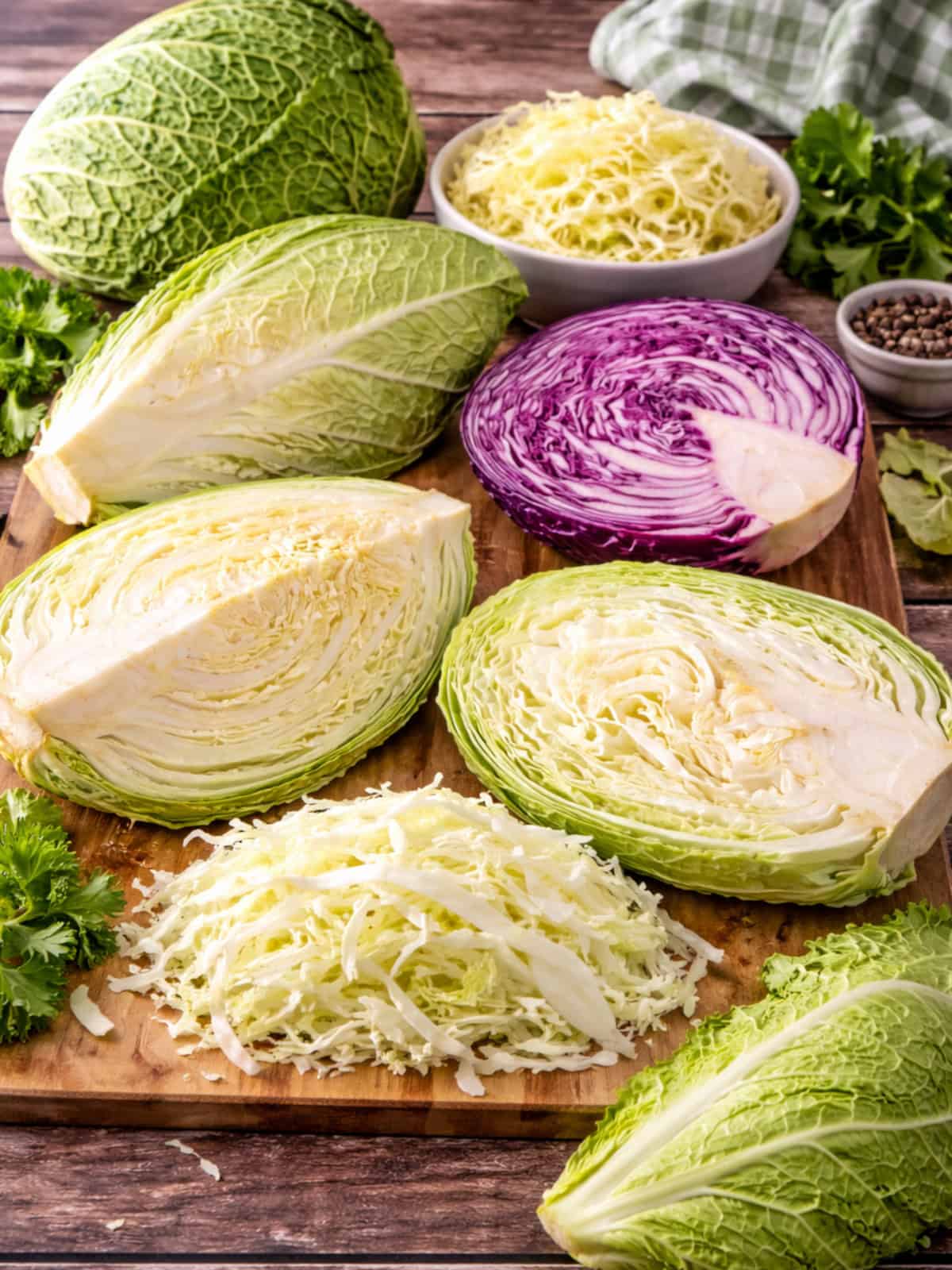
Different Types of Cabbage (With Pictures)
Green Cabbage:

Texture: Firm, dense
Cooking Time: Medium-long
Best Uses: Soups (like my Turkey Lentil Soup with Cabbage & Bacon), stews, cabbage rolls, sauerkraut
Season: Available year-round. Best quality in late summer through fall
Pros: Very versatile and widely available, holds its shape well during cooking
Cons: Thicker leaves, so need longer cooking, can taste bland if under-seasoned
Tip: Green cabbage can taste flat if it’s under-seasoned. Salting it early (even before cooking) helps draw out moisture and brings out its natural sweetness, especially in soups and sautés.
Savoy Cabbage:

Texture: Tender, crinkled
Cooking Time: Short-medium
Best Uses: Cabbage rolls, light soups, sautéed dishes
Season: Fall through winter
Pros: Tender leaves, easy to work with, and naturally sweeter and milder
Cons: Less sturdy for long cooking and not ideal for fermentation
Tip: Savoy cabbage wilts faster than green cabbage, so add it later in cooking. Overcooking can make it overly soft, especially in soups and stuffed cabbage rolls.
Red Cabbage:

Texture: Firm, crunchy
Cooking Time: Short (raw or almost raw) or Medium (cooked)
Best Uses: Slaws, salads, pickling, braised dishes
Season: Late summer through fall
Pros: Great crunch for slaws, adds vibrant color, and holds texture well when braised
Cons: Color can change when cooked without acid, slightly firmer texture than green cabbage (this can also be a pro, depending on your personal preference). Also, raw red cabbage salads usually develop a bitter flavor the next day.
Tip: If you're making red cabbage salad ahead of time, make sure to add acid (vinegar or lemon juice) and salt just before serving (not ahead of time) to keep the flavor balanced.
Napa Cabbage:

Texture: Very tender, juicy
Cooking Time: Short, quick-cooking
Best Uses: Kimchi, stir-fries, dumpling fillings, soups
Season: Fall through winter
Pros: Mild flavor, easy to pair with seasonings
Cons: High water content can make dishes watery, doesn't hold up well during long cooking
Tip: Napa cabbage releases a lot of water as it cooks. For stir-fries or fillings, cook it quickly over high heat or salt and drain it first to avoid watery dishes.
Pointed Cabbage:

Texture: Very tender, delicate
Cooking Time: Very short
Best Uses: Salads, quick sautés, light soups
Season: Spring to early summer
Pros: Naturally sweet, great raw
Cons: Short seasonal availability, too delicate for long cooking or fermentation
Tip: Pointed cabbage is very delicate and doesn’t need much cooking. Treat it more like lettuce than regular cabbage, quick sautés or raw preparations work best.
Frequently Asked Questions
The best cabbage to eat raw is Pointed cabbage, followed closely by Savoy cabbage. Both have tender leaves, a mild flavor, and soften easily without becoming tough or bitter. Red cabbage is also popular raw for its crunch and color, but it has a stronger flavor and is best eaten fresh than after sitting.
The best cabbage for coleslaw is young green cabbage or Savoy cabbage. They’re tender enough to eat raw, mild in flavor, and absorb dressing well without becoming watery.
Botanically, broccoli and cauliflower are related to cabbage, but in cooking, they’re considered separate vegetables. When people talk about “types of cabbage,” they usually mean head-forming cabbages like green, Savoy, red, and Napa.
Other did-you-know posts
I’d Love to Hear From You!
Have you tried cooking with different types of cabbage? Or do you have a favorite recipe where a specific cabbage made all the difference? Share your experiences, questions, or tips in the 📝 comments below! I'd love to hear how you use cabbage in your cooking!
If you tried any of the recipes mentioned here, leave a 🌟 star rating and let us know how they turned out. Your feedback helps us (and others) improve!
Don’t forget to tag us on social media when you try out our tips—we’d love to see your creations! 📸 #Cre8AtHome
Recipe

Red Cabbage and Mango Slaw
Equipment
- 1 Mandolin Slicer optional
Ingredients
- 6` cups red cabbage very thinly shredded
- 2 mango ripe, but not overripe - diced, pit removed
- ½ cup fresh cilantro finely chopped
- 1 tablespoon mayonnaise - for vegan option see note 1 in notes section below
- salt to taste (optional)

Instructions
- Remove the outer layers of the red cabbage and rinse cabbage under running water. Thinly slice the cabbage, leaving out the core. Transfer the sliced red cabbage to a large mixing bowl.
- Dice 1 mango into small pieces and transfer to the mixing bowl.
- Chop cilantro and transfer to the mixing bowl.
- Add the mayo and gently toss the ingredients until they are well coated with the mayo,
Notes
- Make it mayo-free and vegan: substitute mayo with 2 tablespoons of lime juice, 2 tablespoons of olive oil, and some salt and pepper to taste
- For enhanced flavors, refrigerate the slaw for at least 30 minutes before serving. This allows the ingredients to marinate and the flavors to meld.

Comments
No Comments