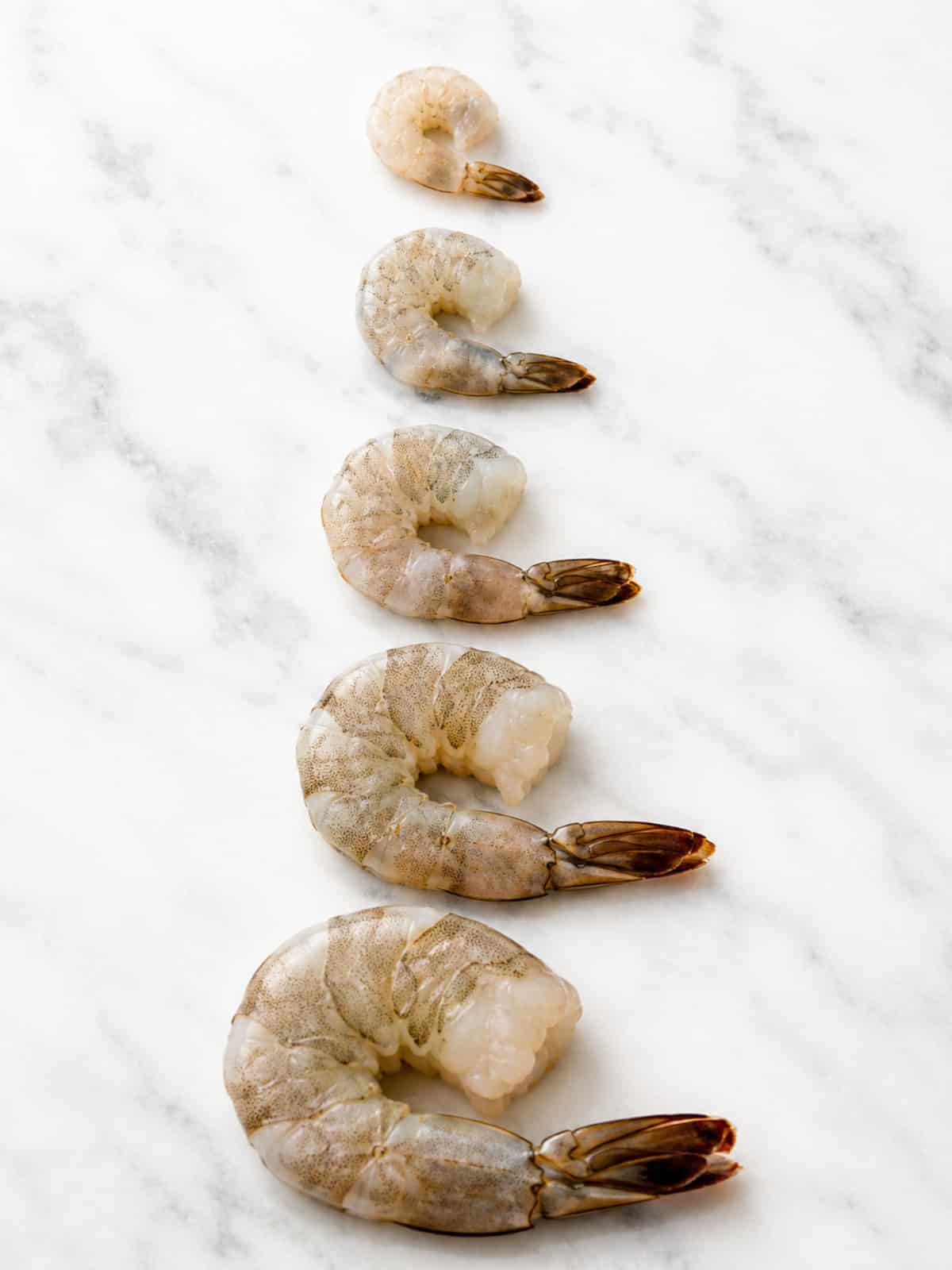
Ever wondered what labels like "16/20" or "31/40" mean when buying shrimp? Shrimp sizing can be surprisingly confusing, especially when terms like jumbo, extra-large, and colossal are used interchangeably. Once you read this Shrimp Sizes Explained guide, you'll understand the sizing system, making it incredibly simple to choose the right shrimp for your recipe.
This post may contain affiliate links. Read my disclosure policy.
The best shrimp size often depends on the recipe. For dishes like Chili Lime Shrimp Sweet Potato Quinoa Salad, I prefer larger shrimp because they stay juicy and create a more impressive presentation. On the other hand, recipes like my Salmon Stuffed With Shrimp benefit from smaller shrimp, which blend easily into the filling without needing to be cut into pieces. Understanding shrimp sizes can help you choose the right option every time, and this guide will walk you through everything you need to know!
Jump to:
What do shrimp sizes mean?
Unlike many foods, shrimp are not sized by length, but are classified by count per pound, which tells you approximately how many shrimp are needed to make one pound.
For example:
- 16/20 shrimp means there are between 16 and 20 shrimp in one pound.
- 31/40 shrimp means there are between 31 and 40 shrimp in one pound.
The lower the number, the larger the shrimp. This is why a package labeled 16/20 contains larger shrimp than a package labeled 41/50. Think of it this way: if it takes only 16–20 shrimp to make a pound, each shrimp must be fairly large. If it takes 41–50 shrimp to make a pound, each shrimp is much smaller.
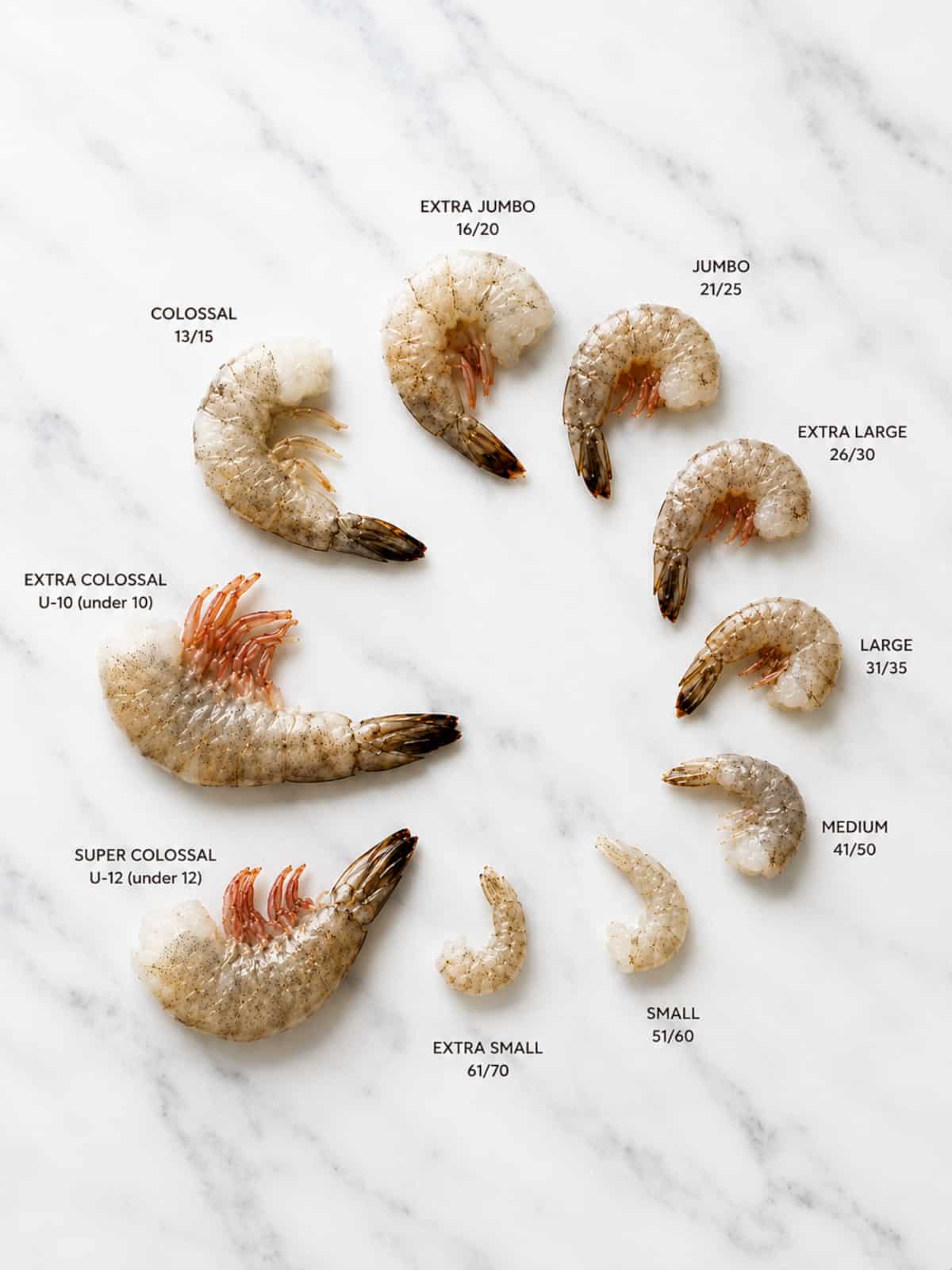
Shrimp size chart
Here's a simple breakdown of the most common shrimp sizes you'll find in grocery stores and seafood markets.
| Size Category | Count Per Pound |
|---|---|
| Colossal | U/10-15 |
| Extra Jumbo | 16/20 |
| Jumbo | 21/25 |
| Extra Large | 26/30 |
| Large | 31/35 |
| Medium | 41/50 |
| Small | 51/60 |
| Extra Small | 61/70 |
The "U" stands for "under." For example, U/10 means there are less than 10 shrimp per pound.
Why shrimp size matters
Larger shrimp tend to stay juicier during cooking and work well in dishes where shrimp are the star of the meal (like this Honey Garlic Eggplant and Shrimp dish). Smaller shrimp cook just a tad faster and are often better suited for soups (like this Simple Seafood Soup Recipe), salads, tacos (like this Crispy Onion Shrimp Lettuce Tacos), and some, not all, pasta dishes. For example, my Creamy Garlic Butter Shrimp Pasta uses larger shrimp because their meaty texture holds up well to the rich, creamy sauce.
Using the wrong size can affect both cooking time and presentation. Smaller shrimp can overcook quickly, and larger shrimp may need additional time in the pan or on the grill.
Best shrimp sizes for different recipes
Garlic Butter Shrimp
Large to jumbo shrimp are ideal because they stay tender and absorb the garlic butter sauce really well. Try my Garlic Butter Shrimp recipe.
Shrimp Cocktail
Extra jumbo or colossal shrimp create an impressive presentation and are easier to dip into cocktail sauce.
Pasta Dishes
Medium to large shrimp work best because they distribute evenly throughout the pasta without overwhelming each bite.
Grilled Shrimp
Larger shrimp are easier to skewer and less likely to overcook on the grill.
Soups, Chowders, and Stir-Fries
Medium shrimp are often the perfect size since they cook quickly and blend well with other ingredients. They're great in this Creamy Seafood Chowder Casserole.
Common shrimp size myths
- Myth #1: "Jumbo" Means the Biggest Shrimp: Not always. A package labeled "jumbo" may actually be smaller than another package labeled "extra jumbo" or "colossal." The count per pound is more important than the marketing label.
- Myth #2: Bigger shrimp are always better: Not necessarily. The best shrimp size depends on the recipe.
- Myth #3: Shrimp with a higher count number are larger: It's actually the opposite. A package labeled 16/20 shrimp contains larger shrimp than a package labeled 41/50 shrimp because fewer shrimp are needed to make up a pound.
- Myth #4: Small shrimp are lower quality: Small shrimp aren't inferior; they simply serve a different purpose. Many recipes actually benefit from smaller shrimp.
- Myth #5: All shrimp in a package are exactly the same size: The numbers represent a range, not an exact count. For example, 21/25 shrimp means you'll typically get between 21 and 25 shrimp per pound, so slight size variations are normal.
Buying tips for choosing the right shrimp
- Check the count per pound rather than marketing terms like "jumbo."
- Choose larger shrimp for grilling, shrimp cocktail, and skillet dishes.
- Choose smaller shrimp for soups, salads, stuffing, and tacos.
- If you're unsure, extra-large and large shrimp (26/30 and 31/35 count) are one of the most versatile options for everyday cooking.
Frequently Asked Questions
Other did-you-know posts
I’d Love to Hear From You!
Have you ever been confused by shrimp size labels like 16/20 or 41/50 at the grocery store? Or do you have a favorite shrimp size that you always reach for when making pasta, tacos, soups, or grilled shrimp?
Share your experiences, questions, and tips in the 📝 comments below!
If this guide helped you better understand shrimp sizing, leave a ⭐ star rating and let us know. Your feedback helps us (and other home cooks) improve!
Don't forget to tag us on social media when you make one of the shrimp recipes mentioned here—we'd love to see your creations! 📸 #Cre8AtHome
Recipe

Sautéed Shrimp and Vegetable Gnocchi
Ingredients
- 1 large aubergine
- 2 tablespoons olive oil
- ½ onion finely chopped
- 3 cloves garlic minced (divided)
- 2 cups crushed tomatoes
- 1 tablespoon Italian seasoning divided
- ½ teaspoon salt or to taste
- ½ teaspoon ground black pepper or to taste
- 1 cup heavy cream
- 1 pound shrimp peeled and deveined
- 1 pound gnocchi store-bought (one package)
- 1 cup Parmesan cheese freshly grated
- 1 cup Mozzarella cheese freshly shredded

Instructions
- Preheat the oven to 400°F (200°C) and line a baking sheet with parchment paper.
- Cut the aubergine in half lengthwise and place it cut-side down on a parchment paper-lined baking dish. Use a fork or a knife to poke several holes in the skin of the aubergine. Bake in the oven for 30 minutes, until the aubergine is tender.1 large aubergine
- In a non-stick pan, heat the olive oil over medium heat. Saute the chopped onions until they are translucent. Add half of the minced garlic and saute for another minute. Add the crushed tomatoes, half of the Italian seasoning, salt, and pepper. Stir well and let it simmer for about 10 minutes.2 tablespoons olive oil, ½ onion, 3 cloves garlic, 2 cups crushed tomatoes, 1 tablespoon Italian seasoning, ½ teaspoon salt, ½ teaspoon ground black pepper
- Stir in the heavy cream and let the sauce simmer for an additional 5 minutes, stirring occasionally.1 cup heavy cream
- Add shrimp to a non-stick pan (no need to add oil as the shrimp release moisture) and season with the remaining half of the Italian seasoning. Sauté until they just start to turn pink but are not fully cooked through, about 1 minute per side. Drain any excess liquid and set aside.1 pound shrimp
- While the aubergine is baking and the sauce is simmering, cook the gnocchi in a medium-sized pot according to the package instructions. Drain, rinse in a mesh strainer under cool water, and set aside.1 pound gnocchi
- Once the aubergine is cooked, remove it from the oven, remove and discard the skin, and place it in a casserole dish. Season the flesh with salt and stir in the remaining minced garlic. Use a fork to gently mash the eggplant.
- Add the cooked shrimp, gnocchi, and sauce to the casserole dish with the aubergine. Mix well. Distribute the shredded Parmesan and Mozzarella cheese over the top and bake in the oven until the cheese has melted and browned, about 20 minutes. In the last few minutes, turn on the broiler to achieve a beautifully browned and bubbly cheese topping.1 cup Parmesan cheese, 1 cup Mozzarella cheese
Notes
- 4 Servings: If serving larger portions as a main dish.
- 6 Servings: If serving smaller portions or as part of a multi-course meal.
- Be sure not to overcook the gnocchi. They are typically done when they float to the surface of the boiling water. Overcooking can make them mushy.
- Be sure to drain the gnocchi well to prevent excess water from thinning the sauce.
- Taste the sauce before mixing it with the other ingredients and adjust the seasoning if necessary. This ensures the final dish is well-seasoned.
- Use freshly grated mozzarella and Parmesan cheese for the best melt and flavor.
- To get a beautifully browned cheese topping, you can place the casserole under the broiler for the last couple of minutes of baking. Keep a close eye on it to avoid burning.

Comments
No Comments