
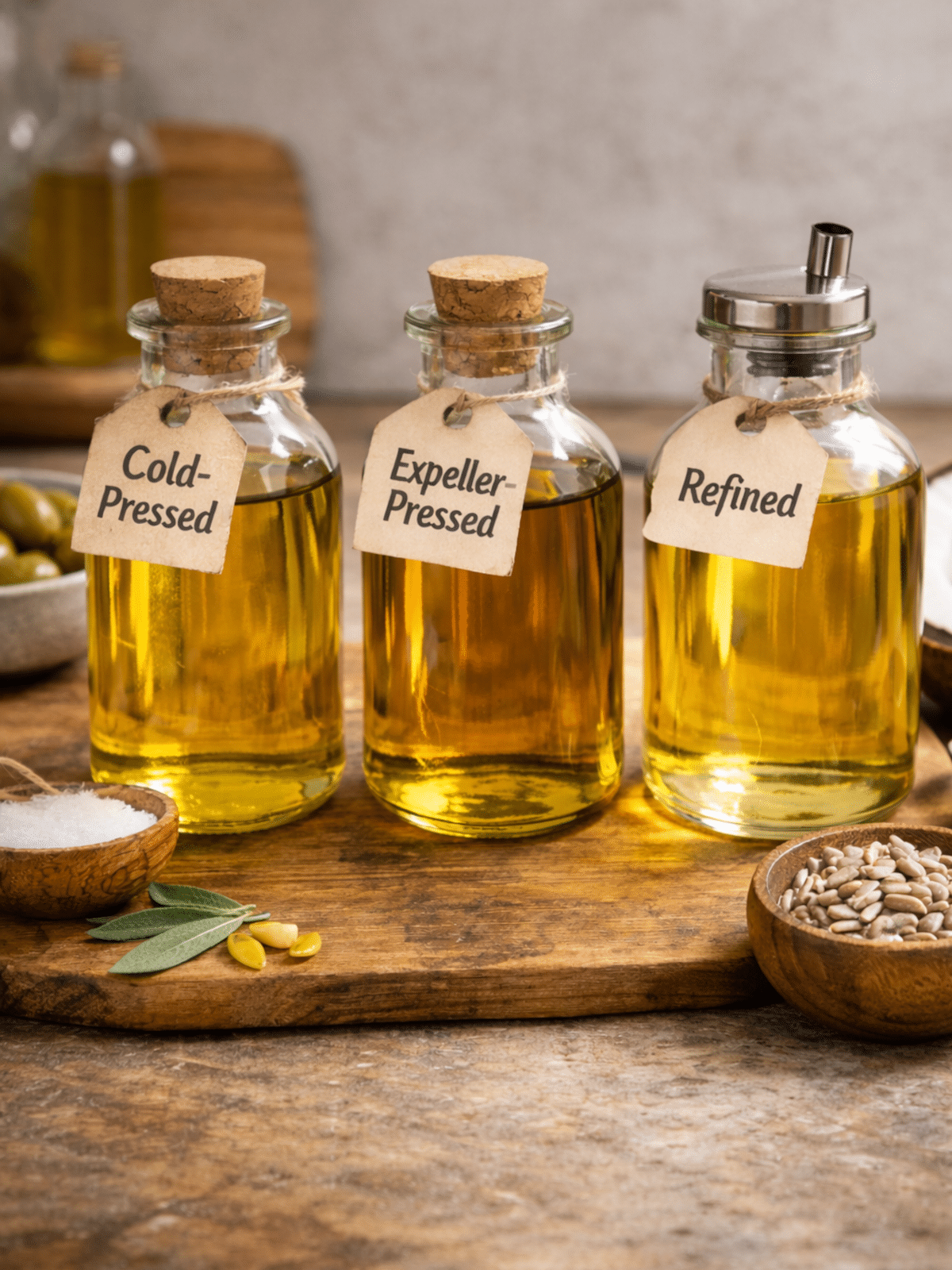
If you've ever stood in the grocery aisle comparing two bottles of oil with very different price tags, wondering what “cold-pressed,” “expeller-pressed,” “refined,” or “pure” actually meant, you’re not alone. Cooking oil labels can be confusing. In this guide to cooking oils explained, we’ll break down the difference between cold-pressed and expeller-pressed oils, how oils like olive, avocado, and coconut are extracted, and how to choose the right one for your cooking.
This post may contain affiliate links. Read my disclosure policy.
Jump to:
- Cold-Pressed vs. Expeller-Pressed Oil: What's the difference?
- Why Oil Labels Can Be Confusing
- How Oil Gets Extracted
- What Happens After Extraction
- What Oil Label Terms Actually Mean
- Smoke Point and Why It Actually Matters
- Which Oils Are Usually Cold-Pressed or Expeller-Pressed?
- Quick Cheat Sheet: Which Oil Should You Use?
- Frequently Asked Questions
- Other did-you-know posts
- Recipe
- Comments
Cold-Pressed vs. Expeller-Pressed Oil: What's the difference?
A mechanical screw press extracts cold-pressed oil without adding any external heat. The press simply crushes the seeds, nuts, or fruit until they release their oil.
Expeller-pressed oil uses the same mechanical pressing process but without strict temperature control. Friction naturally creates some heat during extraction.
So both methods rely on pressure rather than chemicals, but the main difference is simply how much heat the process generates.
Why Oil Labels Can Be Confusing
Most confusion around oil labels comes from mixing up two separate concepts that very often appear on the same bottle:
- How the oil is extracted (cold-pressed, expeller-pressed, etc.)
- How much the oil is processed after it's extracted (refined vs. unrefined)
A cold-pressed oil can still be refined, and an expeller-pressed oil can also be unrefined.
We’ll break down refined vs. unrefined oils in more detail in a separate guide.
How Oil Gets Extracted
Oil extraction refers to how oil is physically or chemically removed from seeds, nuts, or fruit. Different methods affect the quality, cost, and retention of nutrition.
1. Expeller Pressing - Mechanical Extraction
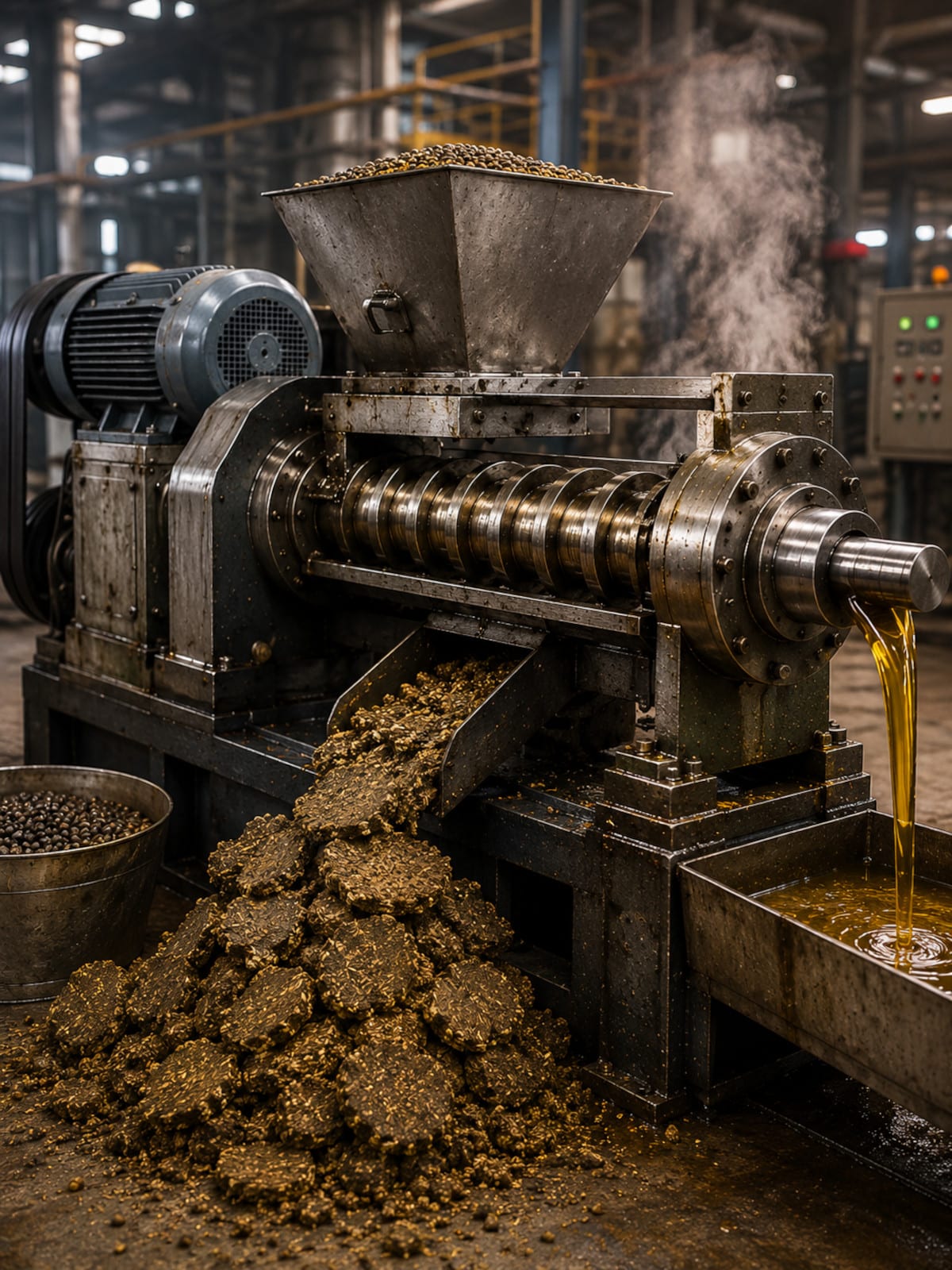
Expeller pressing is a purely mechanical extraction process. The seeds, nuts, or fruit pulp are fed into a large screw press that crushes them under high pressure to release the oil. No chemicals. No solvents. Just physical force.
This method produces oil by squeezing, not dissolving or chemically separating it. When you see "expeller pressed" on a label, it simply means the manufacturer extracted the oil mechanically rather than chemically.
Fun Fact: Expeller pressing is one of humanity's oldest food technologies. Archaeological evidence shows people mechanically pressing sesame and olive oils more than 5,000 years ago. The industrial screw press we use today is just a much more powerful version of the same idea.
2. Cold Pressing
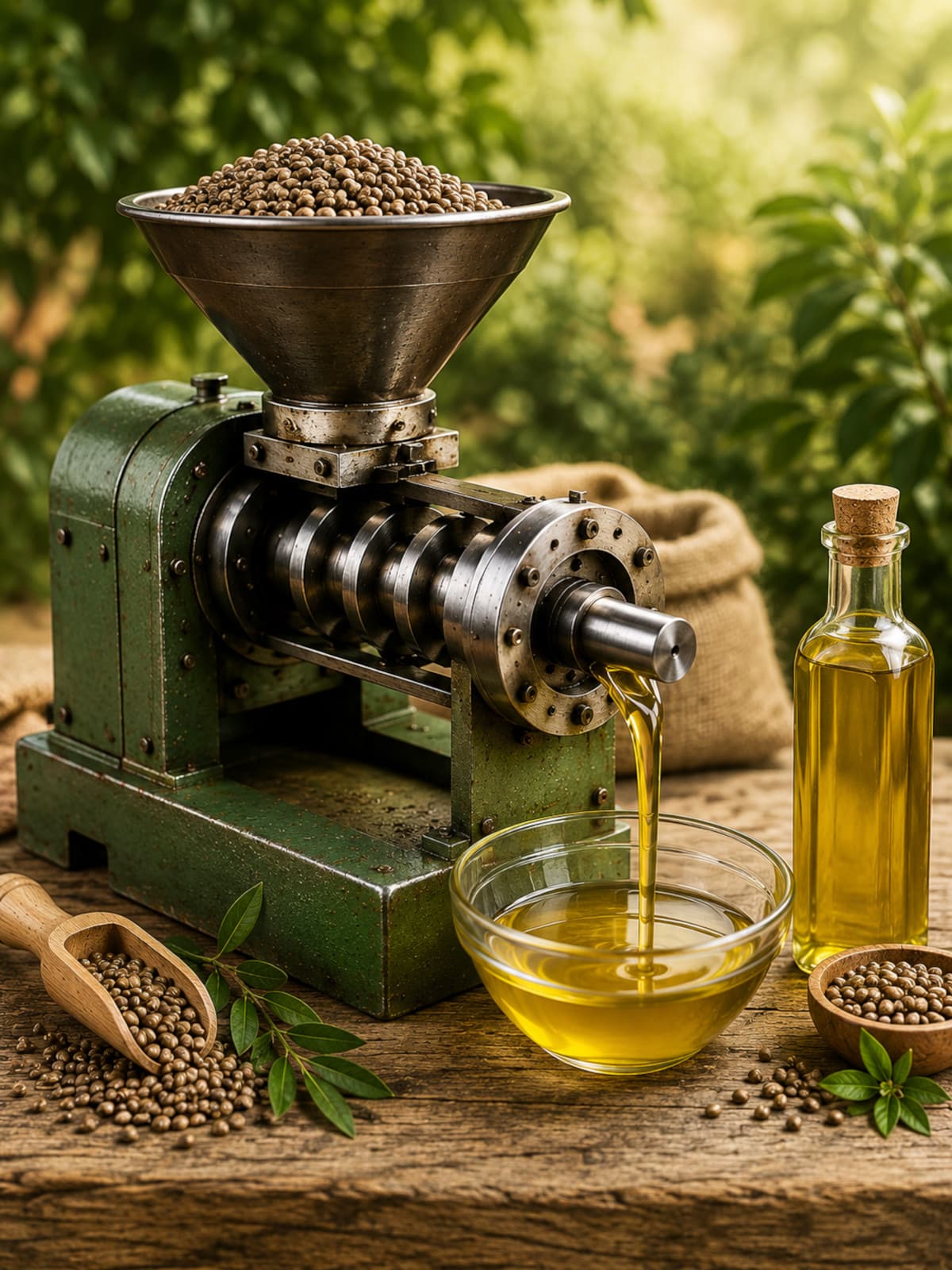
Cold pressing is not a completely separate method; it's simply a type of expeller pressing, but with temperature control. During mechanical pressing, friction naturally creates heat. Cold pressing limits this heat buildup to help preserve the oil’s natural flavor, color, and nutrition.
However, many regions do not strictly regulate the term "cold pressed." In the European Union, for example, olive oil labelled cold pressed must stay below 27°C (80°F). In other regions, the definition can vary.
Quick tip: Cold pressed = expeller pressed + temperature control. If a label says "cold pressed," it's still describing expeller pressing, just with the temperature kept low during the process.
3. Solvent Extraction
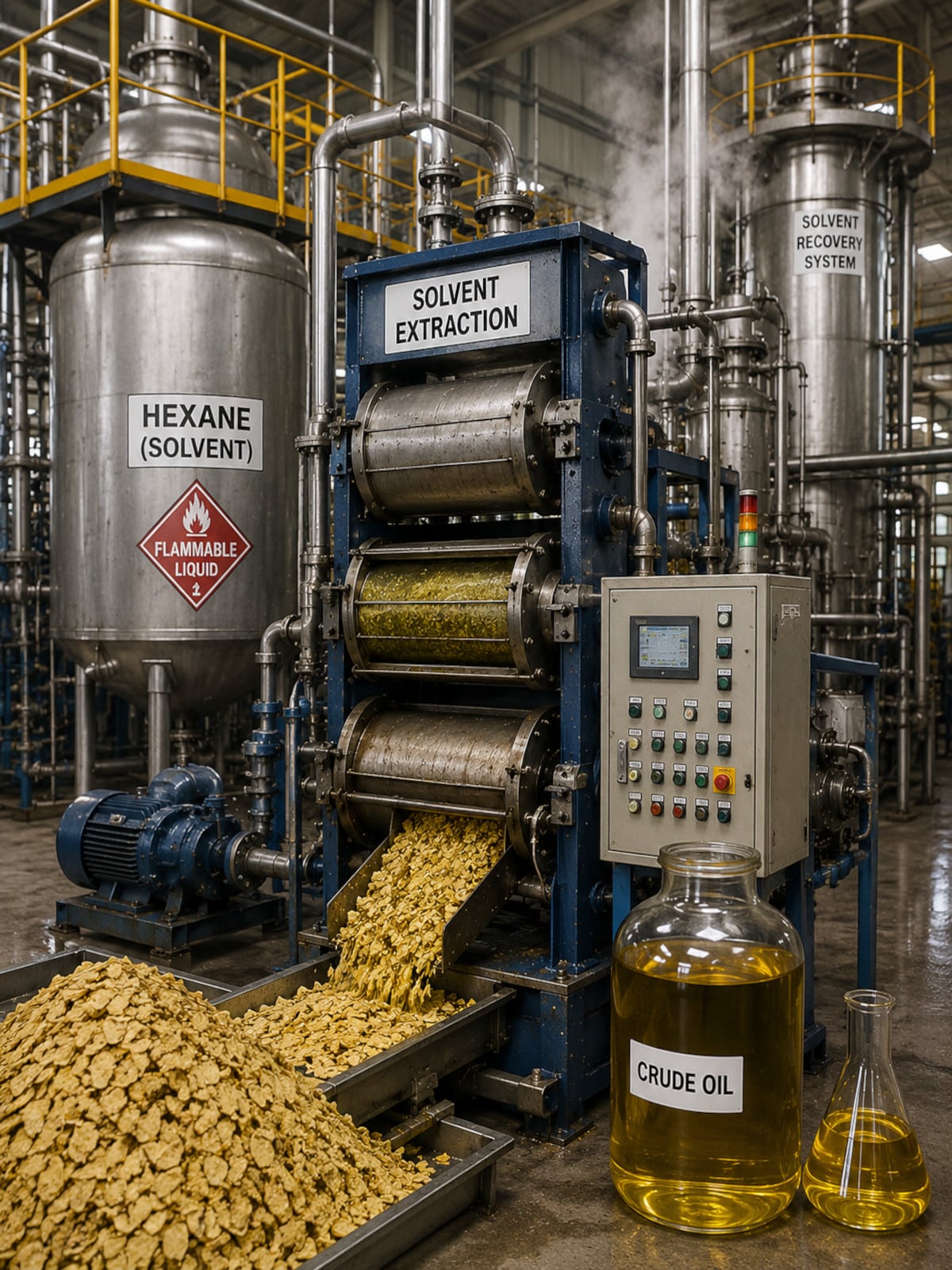
Solvent extraction is the most common industrial method for producing oils like canola, soybean, corn, and many other vegetable oils. In this process, manufacturers wash crushed seeds with a solvent (typically hexane), which dissolves the oil. They then heat the mixture so the solvent evaporates, leaving behind crude oil. From there, producers almost always refine the crude oil before it reaches store shelves.
This method produces a much higher oil yield than mechanical pressing, which is why these oils are generally more affordable.
Manufacturers derive hexane, the solvent used in this extraction method, from the same petroleum chemical family as gasoline. After the oil separates, steam removes the hexane. Though regulatory agencies consider trace residues safe (research is still ongoing), this is one of the main reasons many cooks prefer expeller-pressed or cold-pressed oils when budget allows.
4. Centrifugal Extraction
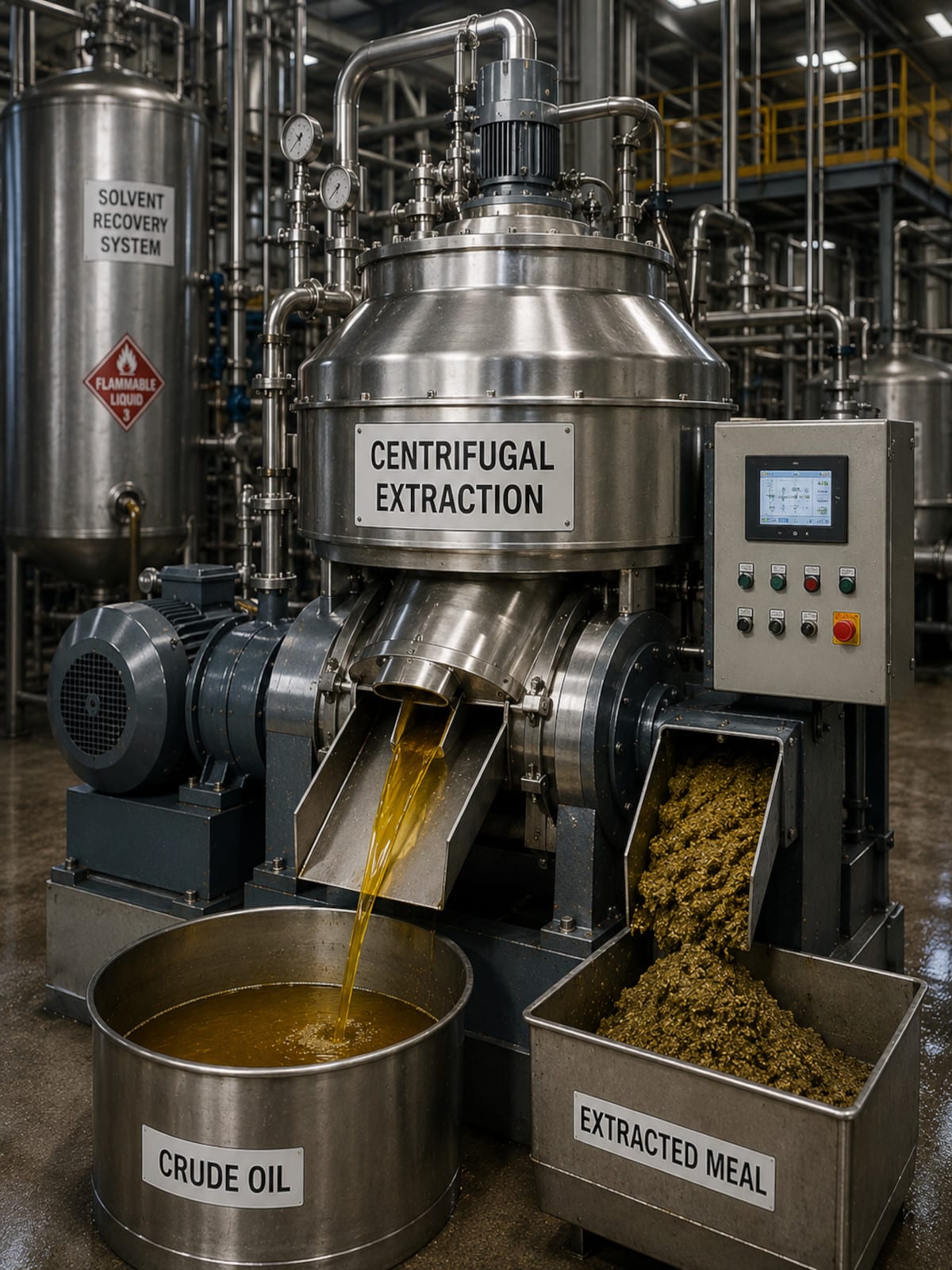
Producers mainly use centrifugal extraction for premium oils such as certain olive and avocado oils. Instead of pressing or using solvents, a high-speed centrifuge spins the crushed fruit at very high speeds to separate the oil. This spinning force separates the oil from water and solids based on density.
When a bottle says "first cold extraction" rather than "first cold press," the producer centrifuged the oil rather than pressed it. You won't see centrifugal extraction used for seeds (sunflower, canola, flax) at commercial scale, those are almost always expeller or solvent extracted.
This process avoids both chemical solvents and high mechanical friction, which makes it a very clean and gentle extraction method. However, the higher cost means producers typically reserve it for higher-end oils.
What Happens After Extraction
After extraction, manufacturers can either leave oils mostly unchanged or further process them to improve stability, shelf life, and cooking performance.
This is where terms like refined and unrefined come in.
- Unrefined oils undergo minimal processing and retain their natural flavor, color, and nutrients
- Refined oils go through additional steps to remove impurities, resulting in a more neutral taste and higher heat stability
These processing methods are completely separate from how producers extracted the oil. A cold-pressed oil can still be refined, and an expeller-pressed oil can be unrefined.
We break this down in detail in our guide to refined vs. unrefined oils.
What Oil Label Terms Actually Mean
Below is a simple breakdown:
Extra Virgin
These oils are cold-pressed and unrefined, meeting a specific quality standard. For olive oil, the law defines this strictly (below 0.8% free acidity, no defects). For other oils like coconut or avocado, brands define the term themselves, so quality can vary.
Virgin
Produced using the same process as extra virgin, but with a slightly lower quality standard (for olive oil, up to 2% free acidity).
Pure
Usually refers to refined oil. “Pure olive oil” is typically a blend of refined oil and a small amount of virgin oil, resulting in a lighter flavor and higher smoke point.
Light
Refers to color and flavor, not calories. Light oils are heavily refined, making them pale and neutral in taste. They contain the same number of calories as unrefined oils.
Natural
A mostly meaningless term with no regulated definition. All cooking oils are derived from natural sources, so this label doesn’t indicate quality or processing method.
Organic
This refers to how the source crop was grown (without synthetic pesticides or fertilizers). It does not indicate whether the oil is cold-pressed, expeller-pressed, refined, or unrefined.
100% / Pure / Single Origin
These describe the oil's source, not how manufacturers processed it. They tell you nothing about the extraction method or refining. They often appear alongside labels like "cold-pressed" or "expeller-pressed," which describe how producers extracted the oil.
Smoke Point and Why It Actually Matters
One reason cold-pressed and expeller-pressed oils are discussed so often is because heat affects oil quality at multiple stages.
When cooking, heat matters again. Oils that retain more delicate compounds are often better suited for:
- dressings
- dipping
- finishing dishes
- lower-heat cooking
More processed or refined oils generally perform better at very high temperatures like frying or searing.
For more detailed information on this, you can read my The Importance of Smoke Point in Cooking guide.
Quick tip: If you're searing, stir-frying, or doing anything in a very hot pan, reach for a refined oil with a high smoke point. Save your good extra virgin olive oil for dressings, finishing, and lower-heat cooking where you actually taste it.
Which Oils Are Usually Cold-Pressed or Expeller-Pressed?
Producers process different oils using different extraction methods depending on the ingredient, desired flavor, and intended cooking use.
Common Cold-Pressed Oils
These oils are often cold-pressed to preserve flavor, aroma, and natural compounds:
- Extra virgin olive oil
- Avocado oil
- Coconut oil
- Flaxseed oil
- Walnut oil
- Sesame oil
Cold-pressed oils typically deliver more flavor, which makes them a popular choice for dressings, dips, drizzling, and lower-heat cooking.
Common Expeller-Pressed Oils
Producers commonly use expeller pressing for oils made on a larger scale or intended for more neutral cooking applications, such as:
- Canola oil
- Sunflower oil
- Soybean oil
- Peanut oil
- Safflower oil
- Some avocado and coconut oils
Expeller-pressed oils can range from minimally processed to fully refined depending on the brand and intended use.
Some oils come in both cold-pressed and expeller-pressed versions, which is why reading labels carefully matters.
Quick Cheat Sheet: Which Oil Should You Use?
| Cooking Use | Best Oil Choice | Why |
|---|---|---|
| Salad dressings & drizzling | Cold-pressed extra virgin olive oil | Rich flavor and aroma |
| Dips & finishing dishes | Cold-pressed olive or avocado oil | Preserves delicate flavor compounds |
| Baking (neutral flavor) | Expeller-pressed coconut oil | Mild flavor and stable texture |
| Baking (coconut flavor) | Cold-pressed coconut oil | Rich coconut flavor |
| Everyday sautéing | Pure olive oil or expeller-pressed avocado oil | Balanced flavor and moderate heat tolerance |
| High-heat cooking & frying | Refined avocado oil | Excellent heat stability for high-temperature cooking |
| Moderate high-heat cooking | Light olive oil | More heat-stable and neutral than EVOO |
| Smoothies & cold applications | Cold-pressed flaxseed oil | Best used without heat |
| Neutral-flavor cooking | Expeller-pressed canola or sunflower oil | Mild taste and versatile |
Quick Tip
If flavor matters most, choose a cold-pressed oil.
If you’re cooking at very high heat, a more refined or neutral oil is usually the better option.
Frequently Asked Questions
Cold pressed oil retains more nutrients and flavour compounds because the temperature is kept lower during extraction. Whether that makes it meaningfully "healthier" depends on how you're using it — if you're cooking at high heat, those delicate compounds will be degraded anyway. For raw applications like dressings or finishing, cold pressed is worth the upgrade.
It means the oil was extracted mechanically, using a screw press, without the use of chemical solvents like hexane. It doesn't tell you whether the oil was cold pressed (temperature-controlled) or whether it was subsequently refined.
Mechanical pressing yields significantly less oil than solvent extraction — you need more raw material to produce the same amount of oil. Add in the stricter temperature controls and quality testing, and the cost of production is simply higher. You're also getting an oil with more intact flavour compounds and nutrients, which commands a premium.
Refined oil isn't inherently bad for you — it's a trade-off. Refining removes some beneficial compounds but produces a more stable, longer-lasting oil that's safer for high-heat cooking. For everyday cooking, refined oils are a perfectly reasonable choice. Using a variety of oils — some unrefined for flavour and cold applications, some refined for heat — is a sensible approach.
A quick note: the images of the extraction equipment are AI-generated. They may not represent specific commercial equipment or facilities. These industrial facilities aren't exactly easy to get a camera into, but this way you'll get the idea! 🙂
Other did-you-know posts
I’d Love to Hear From You!
Have you ever picked up an oil at the store and wondered what the label actually meant? Or do you have a favourite oil you swear by for a specific cooking method? Share your experiences, questions, or tips in the 📝 comments below!
If you tried any of the recipes mentioned here, leave a 🌟 star rating and let us know how they turned out. Your feedback helps us (and others) improve!
Don’t forget to tag us on social media when you try out our tips - we’d love to see your creations! 📸 #Cre8AtHome
Recipe

Homemade Mayonnaise With Avocado Oil
Equipment
Ingredients
- 1 large egg room temperature
- 1 tablespoon lemon juice from fresh lemon, room temperature
- ½ teaspoon Dijon mustard
- ½ teaspoon salt or to taste
- ½ cup avocado oil see notes section
- ½ cup almond oil see notes section

Instructions
- Place the raw (preferrably pasteurized) egg, lemon juice, Dijon mustard, and salt into a tall, narrow container that is wide enough to fit the head of the immersion blender. If you have, use the beaker that sometimes comes with the immersion blender.1 large egg, 1 tablespoon lemon juice, ½ teaspoon Dijon mustard, ½ teaspoon salt
- Place the immersion blender at the bottom of the container and begin blending the ingredients without adding any oil. Blend for about 10-15 seconds until the mixture is fully combined.
- With the immersion blender running, slowly drizzle in the oil—starting with a small amount of avocado oil (or almond oil) at first. You can pour it in a steady stream, but go slowly for the first 15-20 seconds to help the emulsion form. Once you see the mayo start to thicken and emulsify, you can add the rest of the oil more quickly.½ cup avocado oil, ½ cup almond oil
- Continue blending until the mayo reaches a smooth, thick consistency. This should only take a minute or two. Taste and adjust the seasoning, adding more salt or lemon juice if desired.
Notes
-
- Avocado Oil: Look for cold-pressed or 100% pure extra-virgin avocado oil if possible; it retains more nutrients.
- Almond Oil: (do not use if you have allergies to Almonds!). Almond oil balances the avocado oil with a slightly sweet, nutty flavor, which helps keep the mayo’s flavor mild. Go for 100% pure sweet almond oil with no added ingredients or fillers. Some oils may be diluted with cheaper oils, which could impact flavor and quality. Good-quality almond oil has a pale golden color.
- Having the egg and lemon juice at room temperature helps them blend more easily with the oil and improves the emulsification process.
-
- A tall, narrow container helps the immersion blender create a strong vortex, making emulsification faster and more consistent.
-
- Avoid extra-virgin olive oil unless you want a strong, peppery flavor.
-
- Make sure to start adding the oil in a slow, steady stream or a few drops at a time until the mixture begins to thicken. Once the emulsion forms, you can add the remaining oil more quickly.
-
- If the mayo is too thick, add a few drops of water or lemon juice to thin it out. For a thicker mayo, add a bit more oil and blend briefly until smooth.
-
- If your mayo doesn’t emulsify and stays runny, you can fix it by blending a fresh egg yolk in a separate bowl and slowly whisking the broken mayo into the new yolk, start with a bit of the broken mayo and add gradually.
-
- A tiny bit of sugar can round out the flavors without making the mayo taste sweet, especially if the mayo tastes too acidic or salty.


Comments
No Comments