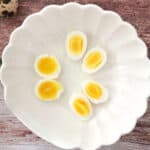
How to Boil Quail Eggs (two ways)
Quail eggs make a delicious addition to salads, appetizers, or snacks. Smaller and more delicate than chicken eggs, quail eggs can be boiled to perfection in just a few minutes. In this How to Boil Quail Eggs guide, we’ll cover two methods for boiling quail eggs, so you can choose the one that best fits your preference—whether you like them soft, medium, or hard-boiled.
Servings: 1 egg
Calories: 14kcal
Equipment
Ingredients
- 1 quail egg room temperature if using Method 2

Instructions
Method 1: Starting with cold water
- Put the quail egg(s) in a pot and cover with cold water. Bring the water to a full boil. You can also add a bit of vinegar to the boiling water; it can weaken the shell's structure and help the shells come off easier.
- Once the water reaches a rolling boil, turn off the heat and leave the eggs in the water for 1 minute for soft-boiled, 2 minutes for medium-boiled, and 3 minutes for hard-boiled.
- Drain the boiling water and place the pot in the sink. Run cold water over the pot with the egg(s) to stop the cooking process, then peel the eggs - see the notes section for tips on peeling.
Method 2: Placing in boiling water
- Bring a small pot or saucepan of water to a rolling boil and turn off the heat. You can also add a bit of vinegar to the boiling water; it can weaken the shell's structure and helps the shells come off easier.
- Gently lower the quail egg(s) into the boiling water with a slotted spoon. For soft-boiled eggs leave them in the water for 2 minutes, for medium-boiled, 3 minutes and for hard-boiled, 4 minutes
- Drain the boiling water and place the pot in the sink. Run cold water over the pot with the eggs to stop the cooking process, then peel the eggs - see the notes section for tips on peeling.
Notes
- This recipe lists 1 quail egg for calculating nutrition information per egg. Feel free to use more eggs based on your preference or serving size!
- When boiling the eggs using the second method, it's best to bring the eggs to room temperature or let them sit in warm water for a few minutes before boiling. This reduces the temperature difference between the eggs and the boiling water, making them less likely to crack.
- Adding a little vinegar or salt to the boiling water can help if an egg cracks.
- Once the eggs are cool, gently tap each egg on a hard surface to crack the shell. Then roll it lightly to create more cracks all over the surface.
- Begin peeling from the wider end of the egg, where there is often an air pocket. This can help you get under the shell easier.
- Watch for the thin skin layer just beneath the shell when peeling. This membrane can sometimes stick to the egg, so peel carefully to avoid breaking the delicate egg white.
- Peeling off the thin membrane along with the shell makes it much easier to peel quail eggs. The membrane often sticks to both the shell and the egg white, so removing it in one go helps prevent the egg from tearing or sticking.
- If you're having trouble peeling, do it under cool or lukewarm running water. The water can help loosen any stubborn bits of shell.
- Give the eggs enough room to move slightly as they cook. Too many eggs can cause them to bump into each other, increasing the risk of cracking.
Nutrition
Calories: 14kcal | Carbohydrates: 0.04g | Protein: 1g | Fat: 1g | Saturated Fat: 0.3g | Polyunsaturated Fat: 0.1g | Monounsaturated Fat: 0.4g | Cholesterol: 76mg | Sodium: 13mg | Potassium: 12mg | Sugar: 0.04g | Vitamin A: 49IU | Calcium: 6mg | Iron: 0.3mg