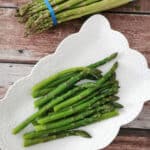
How To Blanch Perfect Asparagus
Blanching asparagus is an easy way to make it more tender and keep its vibrant green color. It involves boiling the asparagus briefly and then quickly cooling it in ice water. In this How To Blanch Perfect Asparagus guide, we'll take you through the steps to achieve perfectly blanched asparagus.
Servings: 4 people
Calories: 34kcal
Equipment
Ingredients
- 1.5 pounds asparagus
- water just enough to submerge the asparagus
- salt to taste, optional

Instructions
- Fill a large pot with water and bring it to a boil. You can add a teaspoon of salt to the boiling water for seasoning, but this is optional, depending on whether you will be eating the asparagus on its own or adding it to a recipe.
- Meanwhile, rinse the asparagus under cold water, then trim the tough ends by snapping them off or cutting them with a knife. The asparagus will naturally break where the tough part ends.
- Once the water is boiling, carefully add the asparagus spears. Make sure the water covers the asparagus completely. Boil the asparagus for about 2-3 minutes. The exact time will depend on the thickness of the asparagus. The goal is to slightly cook the asparagus while keeping it crisp and vibrant.
- While the asparagus is boiling, fill a large bowl with ice and cold water. This will be used to quickly cool down the asparagus and stop the cooking process. If you don't have ice, see the last note in notes section below.
- Using tongs, transfer the blanched asparagus directly from the boiling water to the ice water bath. Allow the asparagus to sit in the ice water for 2-3 minutes.
- Once the asparagus is cooled, remove it from the ice water bath and place it on a clean kitchen towel or paper towel to drain excess water and pat it dry.
- The asparagus can be served immediately or if you're not using it right away, you can store it in the refrigerator for later use.
Notes
- Select asparagus with uniform thickness, especially if you plan to cook them together. This ensures even cooking.
- Use a wide and deep pot to allow the asparagus to be fully submerged in boiling water without overcrowding. This ensures even cooking.
- If blanching a large quantity, work in smaller batches to prevent overcrowding and ensure all the asparagus cooks evenly.
- Use enough water to maintain a rolling boil.
- Test a spear for doneness during the blanching process. It should be tender but still have a slight crunch. Be careful not to overcook.
- Don't skip patting the asparagus dry. Excess water can dilute flavors and affect the texture.
- If you don't have ice for an ice bath, you can fill a large bowl with very cold water and submerge the blanched asparagus in the water immediately after removing it from the boiling water. You can also run cold water over the blanched asparagus in a colander or under the tap. Just make sure that the water is as cold as possible. Gently toss or move the asparagus around in the running water to cool them down evenly. The key is to reduce the temperature quickly to prevent overcooking and to preserve the color and texture of the asparagus.
Nutrition
Calories: 34kcal | Carbohydrates: 7g | Protein: 4g | Fat: 0.2g | Saturated Fat: 0.1g | Polyunsaturated Fat: 0.1g | Sodium: 3mg | Potassium: 344mg | Fiber: 4g | Sugar: 3g | Vitamin A: 1286IU | Vitamin C: 10mg | Calcium: 41mg | Iron: 4mg